Monday, November 9, 2015

Bookish Things To Be Thankful For


One of the things I love the most about this season (aside from eating stuffing and stepping on crunchy leaves) is how attention is turned to being thankful.  Some of it is hokey - sales! marketing! - but on the other hand, when I've looked at lists or made my own, life does seem infinitely better.  Perspective is everything, and this year, I decided to make a list of bookish and reading-related things I'm thankful for.

Learning how to read
Coming from a family of curious, book-loving people
Book bloggers from all around the world, who post and think critically
Inter-library loan (!)
Being able to return books at any branch of my city's library
Learning new skills and facts about anything under the sun - hummingbirds, the history of tea, investing, management, dealing with difficult people
All of the library's non-book related services - job search, computer and tax classes, book groups, after-school programming, and on and on
Book covers - brown paper, stretchy, colored, hard plastic
Bookmarks - magnetic, paper stenciled, laminated with children's drawings, museum bookmarks, ones with tassels
The hush of (some) libraries as you come inside
Having a place to study, do work, and write where I don't have to spend money (like at a coffee shop)
People-watching
Unbent corners of new books
Poetry - Mary Oliver, John 
Haiku collections
Local authors
Book signings
Not being yelled at for browsing without buying
The ache you get in your back from sitting on the floor of the store and reading
Losing yourself completely in a story
Roald Dahl and iconic illustrations
Almost missing your stop when you're so invested in a story/character/plot
Seeing people read anywhere, and seeing what commuters are reading
Used bookstores

Do you make lists like this? What are you thankful for?

Wednesday, October 14, 2015

Autumn Reading

The following is a repost of a previously published blog post.  These are still some of the books I love to recommend!

I always try to think of the fall as a time to recharge, reflect, and delve deeper in the kind of reading I do.  It's not yet time to hide indoors under a blanket, far far away from dripping shoes and muddy coats with a tropical read.  At its best, I think, early fall is the chance to take in the chill and the crisp air and hang out around a campfire in the hopes of getting some whistling apples (yum) and learning something new.  Maybe it's the new year or the beginning of school that still lingers for me, but fall always feels like a new chance to grow.

Last year, my memorable fall reads were The Ministry of Special Cases by Nathan Englander and Major Pettigrew's Last Stand by Helen Simonson.  The Ministry of Special Cases helped me learn about the disappearances of young people in Argentina in the 1970's, and the lengths to which people still go to try and find their loved ones.  Horrible, tragic, devastating - and an absolute must-read.  Major Pettigrew's Last Stand was a mild and mellow retreat into the life and mind of a middle-aged man in the UK, and his search for fulfillment and meaning.  It was a lovely read - I wish I'd started writing about books I read earlier last year! If you've enjoyed Zadie Smith and are looking for something a bit different, I'd give this one a shot.

Here's what I'll be nose-deep in this month:

Someone*, by Alice McDermott An ordinary life—its sharp pains and unexpected joys, its bursts of clarity and moments of confusion—lived by an ordinary woman: this is the subject of Someone, Alice McDermott’s extraordinary return, seven years after the publication of After This. Scattered recollections—of childhood, adolescence, motherhood, old age—come together in this transformative narrative, stitched into a vibrant whole by McDermott’s deft, lyrical voice. Our first glimpse of Marie is as a child: a girl in glasses waiting on a Brooklyn stoop for her beloved father to come home from work. A seemingly innocuous encounter with a young woman named Pegeen sets the bittersweet tone of this remarkable novel. Pegeen describes herself as an “amadan,” a fool; indeed, soon after her chat with Marie, Pegeen tumbles down her own basement stairs. The magic of McDermott’s novel lies in how it reveals us all as fools for this or that, in one way or another. Marie’s first heartbreak and her eventual marriage; her brother’s brief stint as a Catholic priest, subsequent loss of faith, and eventual breakdown; the Second World War; her parents’ deaths; the births and lives of Marie’s children; the changing world of her Irish-American enclave in Brooklyn—McDermott sketches all of it with sympathy and insight. This is a novel that speaks of life as it is daily lived; a crowning achievement by one of the finest American writers at work today. (from Goodreads)

The End of Night: Searching for Natural Darkness in an Age of Artificial Light*, by Paul Bogard A starry night is one of nature's most magical wonders. Yet in our artificially lit world, three-quarters of Americans' eyes never switch to night vision and most of us no longer experience true darkness. In The End of Night, Paul Bogard restores our awareness of the spectacularly primal, wildly dark night sky and how it has influenced the human experience across everything from science to art. From Las Vegas' Luxor Beam--the brightest single spot on this planet--to nights so starlit the sky looks like snow, Bogard blends personal narrative, natural history, science, and history to shed light on the importance of darkness--what we've lost, what we still have, and what we might regain--and the simple ways we can reduce the brightness of our nights tonight. (from Goodreads)

Gilead, by Marilynne Robinson Twenty-four years after her first novel, Housekeeping, Marilynne Robinson returns with an intimate tale of three generations from the Civil War to the twentieth century: a story about fathers and sons and the spiritual battles that still rage at America's heart. Writing in the tradition of Emily Dickinson and Walt Whitman, Marilynne Robinson's beautiful, spare, and spiritual prose allows "even the faithless reader to feel the possibility of transcendent order" (Slate). In the luminous and unforgettable voice of Congregationalist minister John Ames, Gilead reveals the human condition and the often unbearable beauty of an ordinary life. (from Goodreads)

*I picked these two up at the National Book Festival this weekend! I'll be writing more about that experience soon.

What about you? What are you reading this month? What books do you pick up every fall?

Friday, October 9, 2015

Currently


Reading: Between The World And Me by Ta-Nehisi Coates.  Borrowed this one from the library and will be returning it late! Grad school means many awesome readings, but also less time for my own picks.  Lots of thoughts on this one, and more to come.

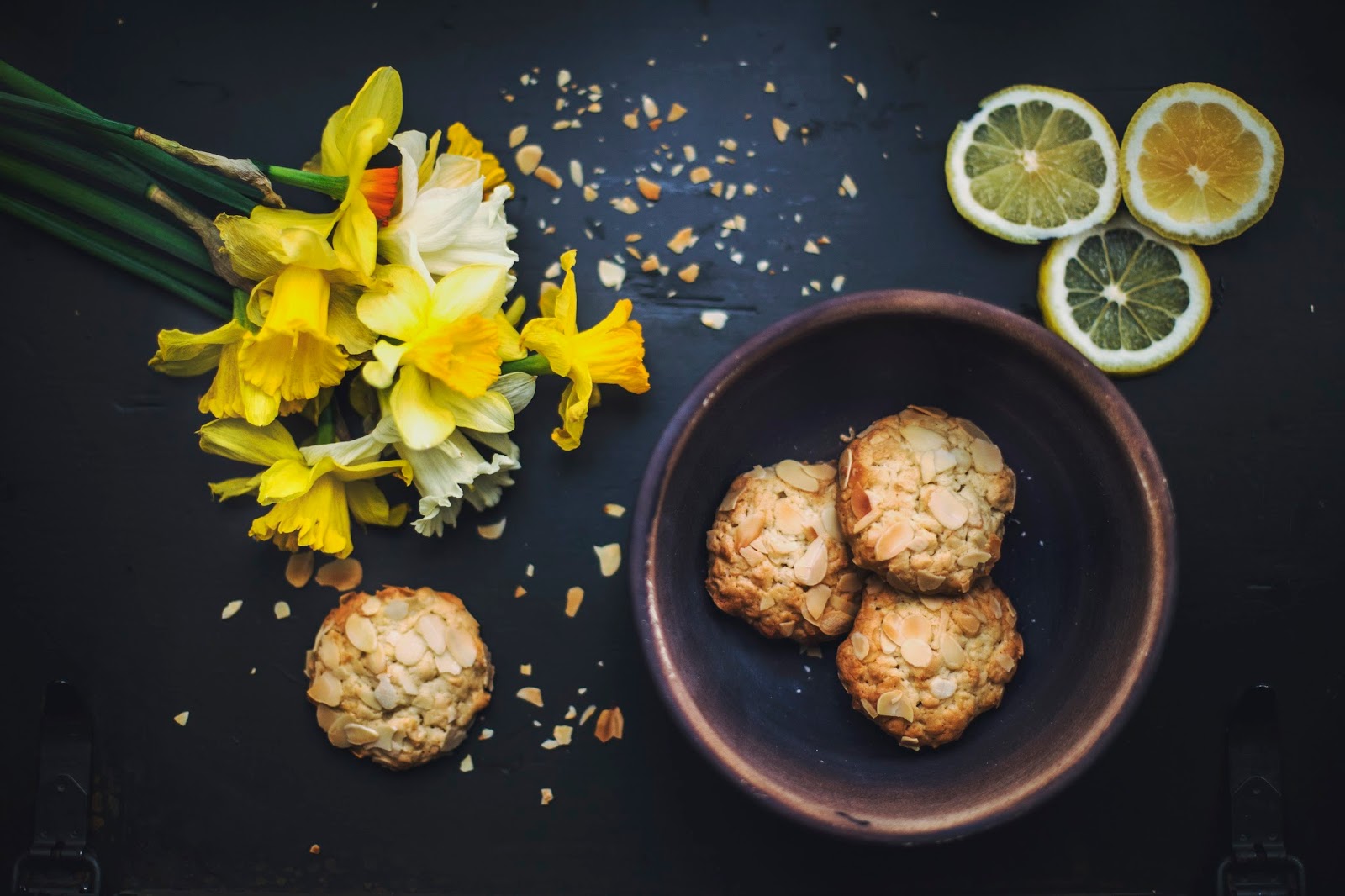
Baking: Well, seriously considering baking (ha!) these ginger snaps from Katy at The Non-Consumer Advocate.  Nothing quite like warm gingery cookies as the weather cools down.

Seeing: Cats in Kimonos - need I say more?

Happy Friday, friends! 

Sunday, September 27, 2015

On Being, Poets, and Irish Writers

I recently listened to an episode of a podcast called On Being, a discussion of the "animating questions at the center of human life" led by Krista Tippett, a Peabody Award-winner.  This episode in particular struck me because in it she interviewed John O'Donohue, an Irish poet who passed way suddenly in 2008, and the opener was so stunning, and so moving, I knew I had to listen to the whole thing.

There are many poets that I love, but there's something to me about Irish writers, equalled only by the Russians, that captures the human spirit - the suffering as well as the beauty.  O'Donohue's writing is no exception.  Below is a recording from the podcast of O'Donohue reading one of his poems, called Beannacht, from his collection Anam Cara.

If you're interested in listening to the whole podcast, you can do so on the OnBeing website or on iTunes (the episode is titled: John O'Donohue: The Inner Landscape of Beauty).  If you're looking for more, find his collections and sit a long while with them - that's what I plan to do.


Tuesday, September 22, 2015

10 Questions

Instead of doing a Top Ten Tuesday today, I thought I'd pull out some answers to the 55 Questions post that went around for ages last year and the year before.  Fifty-five questions is a TON, and scrolling fatigue is real, so here are ten, in no particular order.

Bad book habit?
Leaving them flopped open facedown to keep my place. 

Do you have an e-reader? 
Yes! 2011 Amazon Kindle, still plugging along. Love it.

Do you prefer to read one book at a time, or several at once?
Several at once.

Have your reading habits changed since starting a blog? 
I think I’m more aware of “popular new releases,” which I’m not sure is a good thing. I keep a notebook and a space on my phone to jot down notes/how I feel about a book as soon as I finish it, which is definitely a good thing.

Can you read on the bus?
Nope. I do audiobook-read on the bus, though. 

Favorite place to read? 
Anyplace you can people watch.

What’s your policy on book lending? 
I once lent my copy of Gone With The Wind (which I’d read on a train ride from St. Petersburg to Sochi and which had a lot of sentimental value) to another girl on my trip and never saw it again. Now my motto is: only books I’m not crazy about to begin with.

Do you dog-ear your books? 
Only in desperate situations.

Do you write notes in the margins of your books? 
Not usually – I underline.

Do you break/crack the spine of your books?
Yes! Spine crackers unite! Best way to break in (my own) books.

Did you participate in the 55 Questions challenge? What would your answers be?

Wednesday, September 16, 2015

Top Ten Fall Classics (on a Wednesday!)

*Since Monday and Tuesday were Rosh Hashanah (the Jewish New Year), this week's post is a bit delayed! To those of you who celebrate, L'Shana Tova u'Metukah!
This week's topic is a freebie, and I knew that it would be a great time to bust out some fall classics.  These are my old standbys, the ones I pull out when the weather starts to get cooler and all I want to do is cuddle up inside with a mug of tea, my cat, and no distractions.  Spooky, damp, windy, fraught with moral angst and beloved characters -- are there books that better capture fall?


Monday, September 7, 2015

Paired Reading

In the last few truly delicious-weather days of summer break, while on the hunt for a perfect (free!) spot to sit and read, I realized something.  The two books that I was reading paired nicely together.  So nicely, in fact, that the more I read one, the more I wanted to re-read the other.

Obviously, this is not a new phenomenon, but I haven't noticed it very much in my own reading.  It was doubly surprising when it happened because I was reading two non-fiction books at the same time, which is unusual for me.


The first of these two books was The Millionaire Next Door: The Surprising Secrets of America's Wealth, written in 1996 by Thomas Stanley and William Danko and wildly popular among the personal finance crowd (and other crowds, too).  It was a look into the lives and habits of America's millionaires, but shockingly different than what you or I may have expected.  After publication, it was critiqued and criticized, and with all of the financial changes the world has seen in the last nineteen years, some say outdated.

The second was Better Than Before: Mastering the Habits of Our Everyday Lives by Gretchen Rubin, author of The Happiness Project.  I'd heard of The Happiness Project, but had never read anything by Rubin before, and I picked it up as the dreaded "The library is closing in five minutes" message rang out over the loudspeaker - a rushed library choice is a bit like Russian Roulette.  Better Than Before speaks to the nature of habits: why some are easier to maintain than others, why certain people have trouble building "good" habits, and what it takes to make and keep them.

So what was it about both books that was so fascinating and enjoyable?

Several things, I think.  Each came with a practical approach to understanding how and why people are the way they are.  The millionaires in The Millionaire Next Door seemed to have mastered the habit-building that Gretchen Rubin discussed in Better Than Before.  Combined, the ideas of self-control, hard work, and slow growth blended together beautifully.  Each offered examples of how habit-building or wealth-building worked for others - and could work for the reader - and the voice of each of the narrators was immensely readable.  (So readable, in fact, that I went out and borrowed The Happiness Project as soon as I could, and went on the hunt for Stanley's later books.) Was this the kick I needed to think about habits I want to build, or did it just coincide nicely with the beginning of fall and all of the changes that come with it? Either way, it worked for me.

Have you ever read books that pair together well, or either of these two books? What were your thoughts?